

Elisha and the Bears: The Shocking Scripture Few Churches Teach
Posted in: Bible Stories · Old Testament Prophets · Controversial Scriptures
Date: 2026-6-5 17:46:10
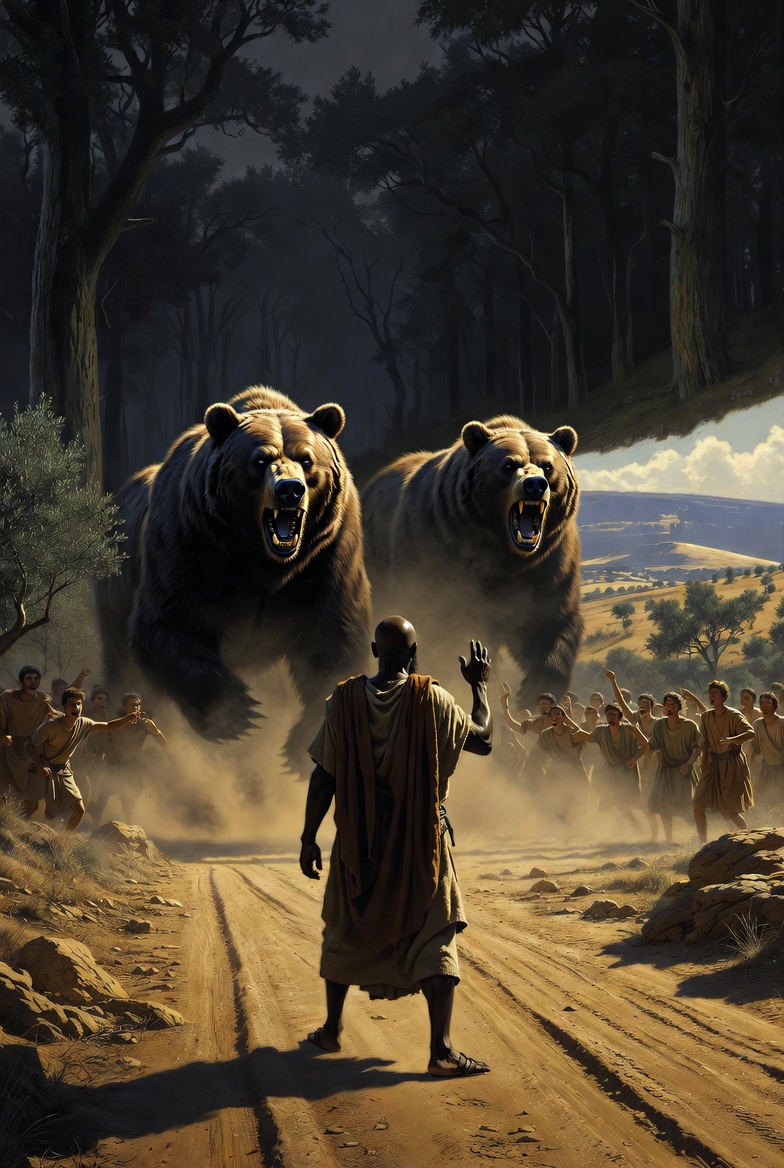
The Infamous Incident Few Dare to Preach
One of the most infamous — and avoided — passages in the Old Testament is 2 Kings 2:23-25. Right after the dramatic ascension of the prophet Elijah in a whirlwind of fire, his successor Elisha encounters mockery on the road to Bethel. The result is swift, violent, and deeply unsettling to modern readers.
The Story, Straight from the Text
The scene is brief but vivid. Elisha, freshly anointed with a double portion of Elijah’s spirit, heads toward Bethel. A group confronts him with taunts centered on his baldness and a command to “go up” — a clear reference to Elijah’s miraculous departure to heaven. Elisha curses them in Yahweh’s name, and two female bears emerge from the forest, mauling 42 of them. The prophet continues his journey without further comment.
Here is the account (NIV):
2 Kings 2:23-25
“From there Elisha went up to Bethel. As he was walking along the road, some boys came out of the town and jeered at him. ‘Get out of here, baldy!’ they said. ‘Get out of here, baldy!’ He turned around, looked at them and called down a curse on them in the name of the Lord. Then two bears came out of the woods and mauled forty-two of the boys. And he went on to Mount Carmel and from there returned to Samaria.”
Context: Right After Elijah’s Ascension
This event happens immediately after one of the Bible’s most spectacular miracles. Elijah is taken up in a chariot of fire. Elisha crosses the Jordan on dry ground with Elijah’s cloak, confirming his prophetic succession. He then heals the waters of Jericho. The bears incident follows as an early act in his ministry — a sign of both blessing and judgment.
Why “Boys” Might Mislead Us
Modern translations often say “small boys,” “little children,” or “youths.” The Hebrew term is flexible. It can describe teenagers or young men, not necessarily small children. In the ancient Near East, a gang of 42+ youths (or young adults) taunting a lone traveler could represent a serious mob threat, not innocent playground teasing.
The location matters hugely: Bethel was a major center of idolatry in the northern kingdom of Israel. King Jeroboam had set up a golden calf there to rival Jerusalem’s temple. By Elisha’s time, it was steeped in Baal worship and rebellion against Yahweh. The taunt “Go up, baldhead!” wasn’t just personal mockery — it rejected God’s prophet and, by extension, God’s authority in a city already opposed to true worship.
What It Means: Judgment, Covenant, and Prophetic Authority
Interpreters highlight several layers:
- Respect for God’s Prophet: Attacking Elisha was an attack on the God he represented. Prophets carried divine authority; mocking them echoed Israel’s broader covenant unfaithfulness.
- A Sign Early in Ministry: Like Joshua entering Canaan, Elisha confronts idolatry at Bethel. The bears serve as a dramatic warning of judgment, previewing the northern kingdom’s eventual fall to Assyria.
- Not Petty Revenge: Elisha invokes a curse “in the name of the Lord.” The bears are God’s response, fitting patterns of divine judgment. It underscores that God defends His servants and will not be mocked indefinitely.
Why Isn’t This Story Well Known?
Simply put, it’s uncomfortable. Sunday school curricula and popular preaching favor uplifting tales of miracles, faith, and redemption. A story of bears mauling youths for taunting a bald prophet feels harsh, primitive, or even cruel to modern sensibilities shaped by grace, forgiveness, and child protection. It raises hard questions about justice, the severity of sin against God, and Old Testament wrath versus New Testament love.
Churches often skip it to avoid difficult conversations or because it doesn’t fit neat moral lessons. Yet it appears in the Bible for a reason — reminding readers that God’s holiness and justice are real, even when unsettling. The passage humanizes prophets (Elisha was bald and apparently sensitive to ridicule) while showing the high stakes of rejecting God’s word in a rebellious culture.
This “you’ll never hear this in church” story challenges us to read the whole Bible honestly. It doesn’t portray God as a cosmic teddy bear but as sovereign Lord who takes His name and His messengers seriously. In a world quick to mock authority, it invites reflection on reverence, the cost of rebellion, and the seriousness of divine patience before judgment.
The bears may shock us, but they point to a consistent biblical theme: God is merciful and patient — yet He will not allow His truth to be trampled forever.
O Yah, the Most High, Sovereign Lord of heaven and earth, we come before You in humility, awe, and reverence.
We thank You for the powerful account of Your prophet Elisha in 2 Kings 2:23-25. We stand amazed at Your holiness and the seriousness with which You defend Your name and Your servants. Even as mockery rose against Your anointed one, You demonstrated that You will not be trifled with.
Father, forgive us for the times we have spoken lightly of Your servants, Your Word, or Your authority. Create in us a deep reverence for You and for those You call to speak on Your behalf. Guard our hearts and our tongues from careless mockery and disrespect.
Yah, raise up bold prophets and teachers in our day who walk in the spirit and power of Elisha. Protect them from jeers, opposition, and spiritual attacks. Let Your hand be upon them for blessing and for judgment when necessary, that Your righteousness may be clearly seen.
Strengthen Your people to honor those You have appointed. Protect our youth from rebellious and mocking spirits. Expose every form of scoffing that rises against You and Your Kingdom. Teach us to fear Your name and walk in holy awe.
May this ancient story remind us that You are both merciful and just — slow to anger, yet unwilling to allow Your truth to be trampled. Let Your Kingdom advance with power and reverence in our generation.
We ask all this in the mighty name of Yahshua the Messiah.
Amein.