
Escalating Cartel Violence and Retaliatory Chaos Ensues in Mexico After Assassination of CJNG Leader El Mencho
Posted in: Cartel Violence · Leader Assassination · Retaliatory Chaos
Date: 2026-2-23 19:33:40
Cartel Conflict Erupts in Mexico Following Death of CJNG Leader
On February 22, 2026, Mexican authorities conducted a raid that resulted in the death of Nemesio Oseguera Cervantes, known as El Mencho, the leader of the Jalisco New Generation Cartel (CJNG). This event has triggered widespread violence across multiple states in Mexico, marking a significant escalation in the country's ongoing struggle against organized crime.
Background on El Mencho and the CJNG
El Mencho, aged 59, was one of Mexico's most wanted criminals. He founded the CJNG after breaking away from other cartels in the early 2010s. The CJNG has grown into a major transnational criminal organization, involved in the production and trafficking of drugs such as fentanyl, methamphetamine, and cocaine, primarily to the United States. The cartel's operations extend across much of Mexico and have networks in nearly all U.S. states. El Mencho's leadership was characterized by aggressive expansion and violent confrontations with rivals and authorities. (Irony level: man spends decades building the most feared cartel in Mexico only to get taken out in a cabin that probably had worse Wi-Fi than a 2005 Motel 6.)
What Happened: The Raid and Death
The raid took place in the town of Tapalpa, Jalisco, where El Mencho was located in a rural cabin. Mexican special forces, supported by intelligence shared with U.S. agencies, attempted to arrest him. The operation escalated into a shootout, leading to the deaths of El Mencho and several associates. This action was part of a broader effort by the Mexican government to dismantle high-level cartel figures, driven by pressure to curb drug trafficking amid the U.S. fentanyl crisis. (Classic government efficiency: spend years tracking the guy, finally find him, then immediately turn the arrest into a full-contact barbecue.)
Why It Happened: Motivations Behind the Operation
The raid was motivated by years of pursuit against El Mencho, who had evaded capture multiple times. Intelligence indicated his location through monitoring of associates. The Mexican government, under President Claudia Sheinbaum, has prioritized combating cartels to reduce violence and drug flows. U.S. involvement stemmed from the CJNG's role in the opioid epidemic, with bilateral cooperation focusing on intelligence sharing to target key leaders. (Nothing says “we’re serious about stopping drugs” like sharing intel so the cartel boss can be removed from the board—only for his former employees to immediately remind everyone why retirement parties are a bad idea in this line of work.)
Immediate Results: Outbreak of Violence
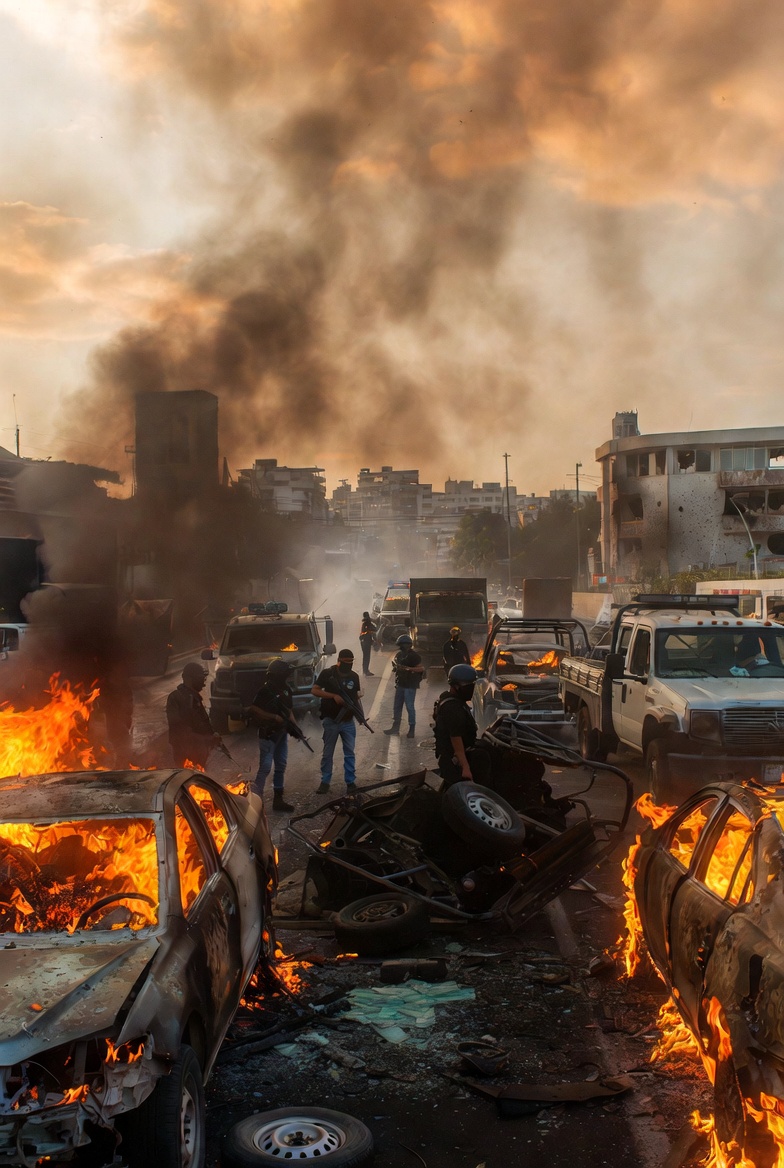
Following confirmation of El Mencho's death, CJNG members initiated retaliatory actions. Within hours, they set up over 250 roadblocks, burned vehicles, and engaged in shootouts with security forces. The violence affected at least 20 states, including major cities like Guadalajara and Puerto Vallarta. At least 70 people were killed, including 25 National Guard members and civilians. Airports and public spaces saw disruptions, with flights canceled and shelter-in-place orders issued.
Government Responses in Mexico and the U.S.
Mexico's President Sheinbaum stated that order has been largely restored, with roadblocks cleared and additional troops deployed, totaling around 9,500 in affected areas. Security forces reported 30 cartel members killed and 70 arrested. The government emphasized no direct U.S. military role but confirmed intelligence cooperation. In the U.S., officials viewed the death as a win against drug trafficking. President Donald Trump called for further Mexican action. Texas Governor Greg Abbott ordered increased border security, including more patrols by state forces, to prevent any spillover. (Bold strategy: kill the cartel CEO and then act surprised when middle management starts rage-quitting in spectacular fashion.)
Current Status and Involvement of Law Enforcement
Law enforcement in Mexico remains aligned with the government, with no reports of shifts to the cartel side in this conflict, though general corruption concerns exist. The violence has subsided somewhat, but isolated incidents continue. Mexico's government is focused on maintaining control and preventing further escalation.
What Happens Next: Expected Developments
The CJNG now faces a leadership vacuum, which could lead to internal power struggles or conflicts with rival cartels like Sinaloa. Short-term increases in violence are anticipated as the group reorganizes. Long-term, such operations have historically fragmented cartels but not eliminated them, potentially leading to more decentralized threats. With the 2026 FIFA World Cup approaching, including events in CJNG-influenced areas, security preparations are intensifying. The situation poses risks to Mexico's stability and could indirectly affect the U.S. through changes in drug supply chains or border activities. (Pro tip for future cartel leaders: maybe don’t build your empire so big that decapitating it creates more problems than it solves. Just a thought.)
Implications for Civilians
Civilians in affected Mexican areas should follow local advisories, avoid travel to high-risk zones, and use emergency services if needed. U.S. citizens are advised by the State Department to monitor updates and exercise caution. While direct threats to the U.S. are low, enhanced border measures are in place to address potential indirect impacts.