

Troll Claims ‘No Computing Without Gates & Jobs’ — Here’s the Real History and the Ruthless Rumors of How They Crushed Their Rivals
Posted in: Theological Reflection · Divine Redemption · Personal Faith Perspective
Date: 2026-4-9 01:45:08
DISCLAIMER: This article discusses historical facts about early computing pioneers and well-known rumors, allegations, and business controversies surrounding Bill Gates, Steve Jobs, Microsoft, and Apple. Many of the stories about “crushing competitors” (including the IBM/CP/M incident, Netscape antitrust case, Xerox PARC GUI, Apple Lisa landfill, and Android rivalry) are based on circulating tech lore, books, interviews, court documents, and media reports — some of which remain disputed or unproven. Microsoft and Apple have denied many of these characterizations, often framing their actions as aggressive but legal competition. No criminal wrongdoing was ever proven in most cases, and several matters were settled without admission of guilt. The piece is intended as a fact-based pushback against exaggerated claims of tech invention, not as a definitive legal or historical verdict. Readers should consult primary sources and multiple perspectives for a complete picture. Reader descretion is advised
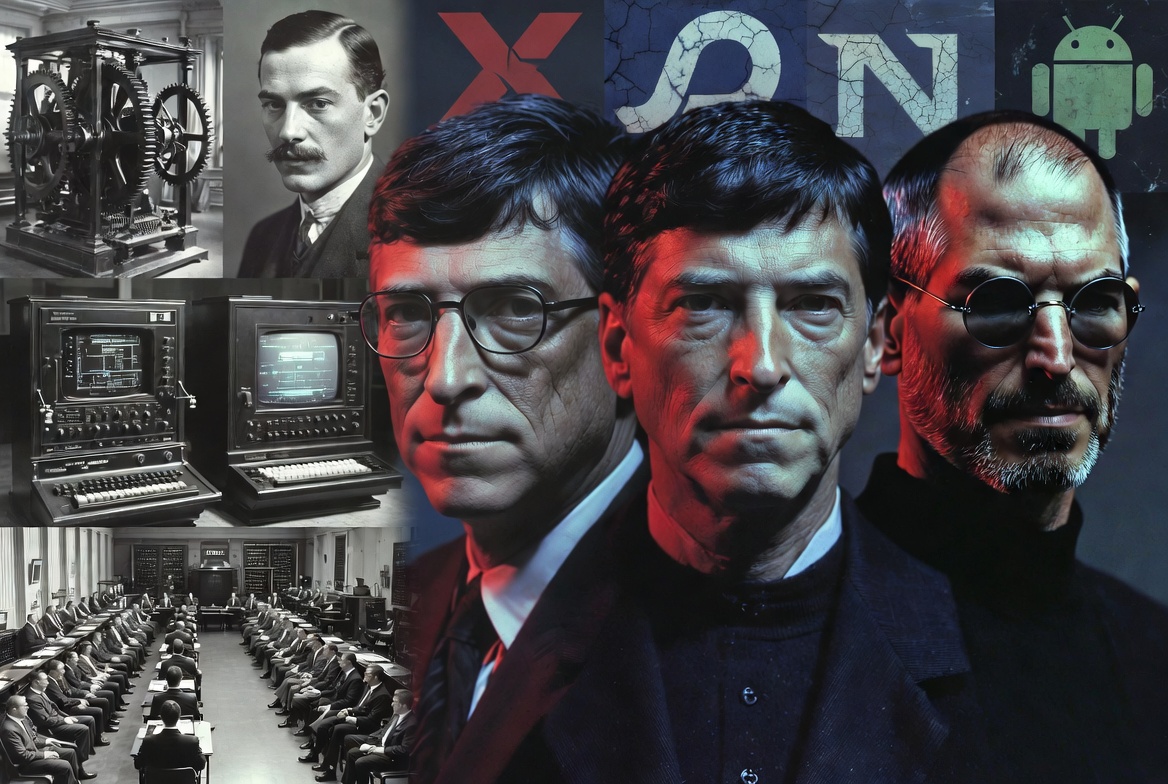
A troll on X actually had the gumption to say to me: 'There wouldn’t be any computing without Gates & Jobs.'
😂 Ridiculous to boot… Computing was already here decades earlier:
• Charles Babbage — Analytical Engine (1830s, first programmable computer concept)
• Alan Turing — theoretical foundations (1930s)
• Konrad Zuse — Z3, first digital programmable computer (1941)
• ENIAC — first general-purpose electronic computer (1945)
Gates & Jobs scaled personal computers brilliantly, but allegations say they rose by brutally and purposely crushing competitors:
Gates/Microsoft:
Gary Kildall and Digital Research (CP/M OS): The most persistent rumor. In 1980, IBM sought an OS for its PC and reportedly approached Kildall's CP/M (then dominant for microcomputers). Legend says Kildall was flying his plane or reluctant, so IBM went to Gates, who provided MS-DOS (based on a quick purchase of QDOS, a CP/M-like clone). Kildall's company faded as MS-DOS became the standard; rumors claim Gates "stole" the opportunity or ideas. Kildall disputed details but didn't sue over source code theft. Forensic analyses later found no direct copying of CP/M code.
Netscape (Navigator browser): During the 1990s browser wars, Microsoft allegedly used Windows dominance to "crush" Netscape—bundling Internet Explorer for free, pressuring PC makers (OEMs) and ISPs, and cutting off "air supply." This fueled the U.S. v. Microsoft antitrust case (findings of anticompetitive acts). Netscape's market share collapsed; the company was later acquired. Microsoft settled without admitting guilt on core claims.
Other software rivals: Rumors tie Microsoft to pressuring or outcompeting companies like WordPerfect, Lotus (spreadsheets), and others via bundling, licensing deals, and Windows integration. Antitrust scrutiny highlighted exclusionary tactics, though defenders call it aggressive competition, not conspiracy.
Jobs/Apple:
Xerox PARC (GUI, mouse, etc.): Common claim that Jobs "stole" graphical user interface ideas after a 1979 tour of Xerox's lab (Apple had investment ties). Jobs denied outright theft; Microsoft later used similar ideas for Windows. Gates famously quipped they both "stole" from Xerox. Apple sued Microsoft over Windows resembling the Mac but lost.
Internal/own products (e.g., Apple Lisa): Rumors of Jobs sabotaging Apple's earlier Lisa computer (GUI pioneer, 1983) while championing the cheaper Macintosh. Stories include him working against the Lisa team, leading to its failure; later, unsold Lisas were allegedly crushed and buried in a landfill (1989) to erase traces of the flop. Some link this to Jobs minimizing a rival project tied to his personal life (daughter named Lisa).
Music competitors (RealNetworks, others): In the iPod/iTunes era, Jobs reportedly pushed updates that broke rival music stores/players (e.g., RealNetworks' Harmony). He called affected competitors "collateral damage" in depositions amid antitrust suits alleging Apple locked down the ecosystem to dominate digital music.
After the iPhone launched, Jobs publicly accused Google/Android of stealing Apple’s ideas. He called Android a “stolen product,” “grand theft,” and said he would spend Apple’s last dollar to “destroy” it. And rumor has it that Android was originally pitched to Jobs, jobs found a reason to fire him, and stole his idea, and he allegedly justified his theft with contracts and agreements as an employee of Apple.
In Conclusion:
The pair had a famous love-hate dynamic: early collaboration (Microsoft made Mac software), then accusations of idea theft (Jobs on Windows GUI), lawsuits, and a 1997 bailout where Microsoft invested in struggling Apple. Rumors often paint them as cutthroat, but both benefited from timing, partnerships (like IBM for Gates), and market shifts more than proven sabotage. Antitrust cases targeted Microsoft heavily; Apple faced scrutiny later (e.g., music, employee poaching).
Gates and Microsoft faced heavy criticism for monopoly-like behavior in the 1990s, but many view their success as superior execution plus IBM's PC platform choice.