

Rocket Propelled Attacks and Family Feud Vendettas: The Turbulent Political Violence of the Philippines' Southern Frontier
Posted in: Political Violence · Clan Feuds · Mindanao Conflict
Date: 2026-1-29 21:57:33
Content note: This article discusses political violence, clan rivalries, and historical events in the southern Philippines, including references to the 2009 Maguindanao massacre. It's a neutral overview for those unfamiliar with the region—read with care if sensitive topics are triggering.
Enter The Nightmare
In the bustling yet volatile landscapes of the southern Philippines, a recent incident has spotlighted the enduring grip of clan rivalries and political violence. Imagine pulling up to a gas station only to have a rocket-propelled grenade slam into your armored SUV—it's the sort of absurdity that might sound like a bad action movie plot to someone sipping coffee in a quiet suburban cafe, but for Mayor Akmad Mitra Ampatuan, it's just another day surviving in the rough-and-tumble world of local governance.
The Ambush That Shook Maguindanao
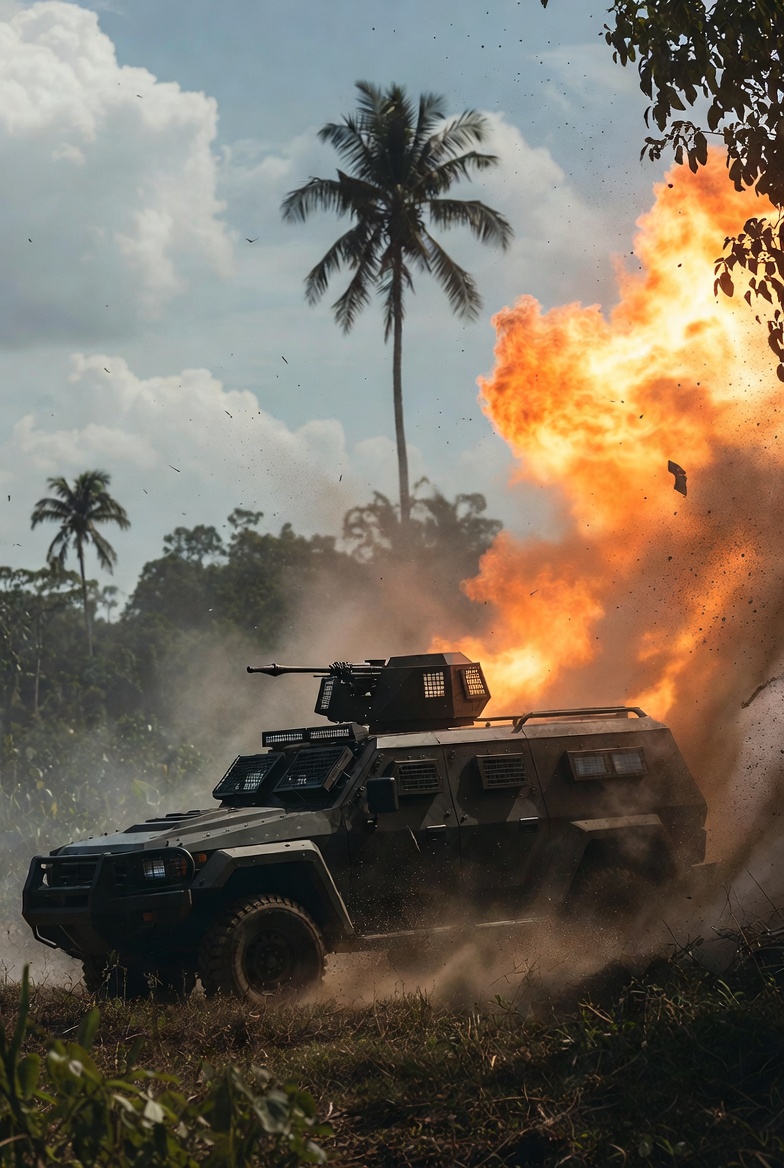
It happened in late January 2026, in the municipality of Shariff Aguak, a place where dusty roads and palm trees hide a history soaked in blood. Mayor Ampatuan was cruising in his fortified Toyota Land Cruiser when assailants leaped from a minivan, unleashing an RPG that exploded against the vehicle in a plume of smoke and fire. Gunfire followed, but thanks to the armor plating, the mayor emerged unscathed, though his security team wasn't so lucky, with some sustaining injuries. Police gave chase, neutralizing several suspects and recovering the launcher—military-grade hardware that's about as casual in these parts as a bazooka at a backyard barbecue, which is to say, not at all.
This wasn't Ampatuan's first rodeo with death. He's dodged attempts before—a roadside bomb in 2010, more ambushes in 2014 and 2019—each one a grim reminder that in this corner of the world, politics isn't just cutthroat; it's explosive. The mayor, puzzled and resolute, claims no known enemies, but whispers in the region point to deeper vendettas, the kind that simmer for generations.
The Shadow of the Ampatuan Clan
To understand why someone might lob a rocket at a local leader, you have to peel back layers of family legacy that read like a tragic epic. The Ampatuans have long dominated Maguindanao province, wielding power through a network of alliances, intimidation, and sheer force. Think of them as a dynasty that's part family business, part private militia—controlling everything from elections to law enforcement in a way that would make old-school political bosses green with envy.
The clan's darkest chapter unfolded in 2009 with the Maguindanao massacre, an event so horrific it still sends chills down spines worldwide. When a rival politician dared to challenge their hold on the governorship, a convoy of his supporters—including family members, lawyers, and over 30 journalists—was waylaid on a lonely road. What followed was a slaughter: 58 people executed and dumped in mass graves, the backhoe used to bury them a stark symbol of premeditated brutality. The Ampatuans, led by figures like Andal Ampatuan Jr., were accused of orchestrating it all, allegedly with the help of loyal police and armed civilians. Trials dragged on for a decade, ending in convictions for some, but the scars remain fresh, fueling grudges that don't fade with time.
Our mayor, Akmad Ampatuan, isn't directly tied to that bloodshed; in fact, he's distanced himself, even testifying against kin in court. But in a world where blood ties bind tighter than law, that act of defiance might as well paint a target on his back. It's the kind of family squabble that escalates from Thanksgiving arguments to full-blown warfare, leaving outsiders wondering how something so personal spirals into public chaos.
Roots of Conflict in Mindanao's Muslim Heartland
Zoom out from the Ampatuans, and you'll see this isn't just one clan's drama—it's woven into the fabric of Mindanao, the Philippines' southern island, where Muslim-majority communities have fought for autonomy amid waves of outside influence. For centuries, the Moro people—descendants of Islamic sultanates—resisted Spanish colonizers, then American forces after the turn of the 20th century, in battles that echoed the fierce independence of Native American tribes facing westward expansion.
Independence in 1946 brought new tensions: Christian settlers from the north flooded in, displacing locals and igniting insurgencies in the 1960s and 70s. Groups like the Moro National Liberation Front and its splinter, the Moro Islamic Liberation Front, waged guerrilla wars for self-rule, turning the region into a patchwork of ceasefires and flare-ups. Peace accords in the 1990s and 2010s birthed the Bangsamoro Autonomous Region, a semi-independent zone meant to heal old wounds with its own government and resources. Yet, pockets of unrest linger, from jihadist offshoots to the everyday peril of "rido"—clan feuds that turn neighbor against neighbor over land, honor, or politics, often with automatic weapons as the mediators.
In these areas, rule of law can feel like a distant dream, where private armies roam freer than in the Wild West tales of yore. It's absurd, really, that in 2026, with smartphones buzzing and global trade humming, a family disagreement can erupt into RPG-fueled ambushes at gas stations, but that's the blunt reality when historical grievances meet modern firepower.
A Call for Change Amid Enduring Struggles
The Philippines as a whole is no stranger to resilience— a nation of islands that's bounced back from dictatorships, natural disasters, and economic highs and lows. Cities like Manila pulse with innovation and energy, far removed from Mindanao's troubles. But in the south, the cycle of violence underscores a need for deeper reforms: dismantling armed groups, bolstering courts to deliver swift justice, and investing in communities to douse the flames of poverty that fuel feuds.
Filipinos, known for their warmth and spirit, deserve streets free from the shadow of clan wars, where politics serves the people rather than perpetuating iron-fisted control. Progress is inching forward—through international aid, local peace initiatives, and a collective weariness of the bloodshed—but it's a slow burn. In the end, resolving these deep-seated rifts isn't about grand revolutions; it's about steady steps toward equity, turning absurd tragedies into relics of the past rather than headlines of the present.
A Quiet Wish from Afar
In the end, this story isn't mine to own. These are not my streets, not my family ties stretched thin by decades of grudge and gunfire, not my daily choice between silence and survival in a place where power feels like it belongs to bloodlines more than ballots. As someone looking in from thousands of miles away, I can only say what many outsiders feel when reading headlines like these: it hurts to see good people caught in cycles that seem so avoidable, yet so stubbornly persistent.
If there's a moral tucked into all this absurdity—like the old fable where a bundle of sticks stands unbreakable together, but snaps one by one when divided—it's that no single family, no matter how entrenched or well-armed, should corner the market on governance or justice. When one clan grips the reins so tightly that rockets become the response to rivalry, everyone loses: the communities left in the crossfire, the future generations inheriting the feud, even the powerful themselves, forever watching their backs.
The Filipino people—warm, resourceful, quick to laugh even in hard times—deserve better than perpetual vendettas dressed up as politics. Resolution won't come from outside lectures or magic fixes; it starts with local voices demanding accountability, stronger institutions that outlast any dynasty, and a shared recognition that true strength lies in breaking the cycle, not feeding it. From afar, one can only hope that the next chapter turns toward peace, and not just into another plume of smoke at a gas station.